AILEENA
MACHINA

I build things in code, write about why they break, and DJ while they keep running.

scroll
DATA ARCHIVE

Research Dispatch

2026.05.29

Why AI Has to Be Instantaneous

Two things keep AI out of most products: it's too slow and too expensive. Taalas — founded by Tenstorrent founder Ljubisa Bajic — casts the model directly into silicon. Their first chip bakes in Llama 3.1 8B and runs 17,000 tokens/sec per user, ~10× the fastest GPUs, 20× cheaper to build, ~10× less power. You can talk to it now at ChatJimmy. Why extreme speed isn't a feature but the thing that makes agents, voice, and cheap reasoning possible — the memory wall it kills, and the catch: one frozen, aggressively-quantized model per chip.

2026.05.30

Three Ways to Arbitrage Zcash (One Isn't Real)

ZEC trades across a dozen venues, three internal shielded pools, and a handful of cross-chain bridges — and people call all three layers arbitrage. One is a myth: between Sprout/Sapling/Orchard there's no price spread, only the turnstile that makes pools auditable. Cross-venue (Binance perps, OKX relisted, Coinbase, Robinhood) is real but slow — gated by deshield-to-deposit, slow finality, and thin books. Cross-chain is the widest, where arbitrage literally is the peg for THORChain/Maya native-swap pools, bounded by bridge latency and a residual metadata leak. The thread running through all three: privacy is friction at every layer.

2026.05.29

Reading Solana — From Data Structure to API Call

Everything on Solana is an account, and every RPC method is just a different lens for reading one. The whole map: six layers of on-chain data — account, transaction, block, token, validator, network — each paired with the exact call that pulls it back, plus where Helius's enhanced parsing and the DAS layer for NFTs bolt on off-chain. Closes with the six rules that explain why the API looks the way it does (and why "this was a swap" is never a raw on-chain field).

See the whole archive →

INVESTING

A woman should have her own portfolio

2026.06.02

People Love to Buy. They Don't Love to Be Sold.

The best tech salespeople don't sell — they listen, translate, and make the buyer feel right. Pressure is what happens when one side is trying to compensate for an exchange the other side doesn't believe in. You don't have to change your character; you change your sales (it's a skill, not a personality). Read which buyer is across the line — logical vs emotional, most are 70/30 not 100/0. Thick skin means don't carry the last call's residue into the next one (the call after a hard no is the one that pays). Most "objections" are requests for information in a defensive frame. And now there's a third buyer on the line: AI agents — pure logical, where your spec is your homepage, your eval is your demo, your error codes are your objection-handling. The agent picks through a five-stage acceptance loop (recall → eligibility → eval → score → justify), GEO is replacing SEO (be quoted, not clicked), and the contract is now seven contracts (API, pricing, SLA, data, compliance, change, legal) — each independently scored before the first call.

2026.06.02

The PCB Stack Inside an AI Rack

Five PCBs sit inside a current-generation AI rack — HDI compute, switch, mid plane, orthogonal backplane, and the substrate-like board that decides 2027. Taiwan held the high-layer-board market for two decades. Mainland China overtook them on fifth-order 22-layer HDI in 2025 (Victory Giant at ~90% yield, >70% of GB200 / GB300 share, against Unimicron at ~80% — the difference is factory age: 2024-greenfield vs 2001–2002 line). Why the mid plane exists (NVIDIA 576 rack replaces 5,000+ copper cables with a 44-layer orthogonal stack: M9 + Q-cloth + 4th-gen copper foil, 18 per cabinet). Three barriers reshuffling share: substrate-like PCB at 10 µm lines requires new clean-room plants, not retrofits (Avary has Apple SLP experience, Victory Giant is committing capex); M9 / Q-cloth retires mechanical drilling and opens Han's Laser to >60% domestic share; copper sintering for mid plane + backplane is industry-first and execution-speed-led. Plus the parallel Google TPU build (forecast revised 2.5–3M → 4M chips at ~$9k each; uses 22–24 layer multi-high-layer not HDI; ISU / Wus / ChaoYing incumbent; Victory Giant queuing for ~6 month certification).

2026.06.02

How CPO Actually Gets Built

CPO is the technology that erases the pluggable optical-module empire — and the headline ship dates have slipped by a quarter every quarter. Walks what's actually inside the optical engine (PIC at 65 nm + EIC at 6 nm + 3-D FAU with sub-µm alignment + external ≥300 mW CW source), the six-step packaging flow, where the yield breaks (TSMC at ~75% vs 90–95% target — PIC/EIC hybrid bond loses ~10% alone; FAU active coupling needs engineers with 6-month training cycles), and why the ecosystem is structurally slow: Nvidia–TSMC own a closed main line, third parties are second-tier, CSPs hedge into NPO and keep pluggables. Real volume is 2027–2029; 2026 ships ~15,000 CPO switches off the back of a wafer test floor where one wafer takes 20+ hours to fully test. NVIDIA has prepaid via a $2B Coherent equity stake and a multi-B Lumentum commitment; Foxconn assembles exclusively (~25k unit 2027 target, ~10k+ likely actual); TFC delivered 7,200 FAU for demo only.

2026.06.01

Where Broadcom Sits in the AI Stack

The most-dominant non-Nvidia AI silicon vendor — Google's TPU partner across v7 and v8, the data-centre switch-chip king (Tomahawk 6 at 1.2T per port), one of two real EML suppliers (~half its capacity booked by Eoptolink alone), and ~90% of the high-speed pluggable-DSP market outside Nvidia. And the company facing the most credible disruption pressure in the sector: MediaTek peeling off Google's V8E inference TPU, Marvell winning AWS Trainium 2/3 and a Google FFN socket, OpenAI guiding 2026 ASIC volumes conservatively (~2,000 racks at ~$3M each = $6–8B, vs ~$30B/year of OpenAI–Nvidia spend), and a CPO transition that would cannibalize Broadcom's own EML + DSP empire. Four pillars and three pressures.

2026.06.01

Where Marvell Sits in the AI Optical Stack

One specific tier of the AI optical supply chain that Marvell owns more or less alone: the TIA (the amplifier between the photon and the brain). ~80% of 800G single-mode TIA, and the only volume player on 1.6T TIA today — Macom and Semtech still in sampling, 1H 2027 at the earliest. Above it Marvell fights Broadcom for the DSP market (~90% non-Nvidia is Broadcom's) while both ration the same TSMC 3 nm capacity. White-box switch silicon for Google/Amazon/Microsoft is jointly defended. Where Marvell is absent: Google's 2.4T coherent (Google's own DSP, ex-Inphi team) and the Nvidia–TSMC 3.2T CPO main line. Verdict: technology lead in TIA, structural pressure in DSP, co-architect in NPO.

2026.06.01

What's Cooling the AI Build-Out

Optical modules hit a thermal cliff at 20 watts. Below it air cooling works but a 1.6T module runs at ~1.4T effective; above it only liquid cools — and Amphenol holds a near-monopoly on the patented cage assembly (TE projected to parity by 2027). Behind them, tier-2 contract manufacturers (Dintech, Sunway, Yidong) capture the actual upside as demand spikes. Unit economics: ~¥1,800 per 2×8 set. Two binary risks above the steady-state Pareto: CPO (2027–2028) zeroes the pluggable-cooling stack, while Coherent's diamond-particle SiC ceramic (2× copper conductivity at 60% the weight, −15 °C chip temp, 2H 2027 revenue) is the one non-displaceable wildcard.

2026.05.31

Let There Be Light Modules

If the GPU is the brain of an AI cluster, the optical module is the nerve that lets the brains talk — it turns electricity into light, runs it down a fiber, and turns it back. What an optical module actually is (EML → fiber → photodetector, a lighthouse blinking Morse at terabit speed), the routes racing to build it (EML, silicon photonics, LPO, CPO, Micro LED, plus Google's OCS switching in the light domain), where the value pools (optical chips booked to 2028, the optical engine, hand-built FAUs, Coherent's isolator monopoly), and where it goes to work (in-DC 800G→1.6T, long-haul DCI, in-rack CPO). Ends on a one-screen mind map — because without it, the strongest GPU is an island.

2026.05.30

What AI Hardware Is Running Out Of

Everyone watches the GPU, but the AI build-out is gated by the unglamorous materials feeding the racks — and almost none have spare capacity. A choke-point map by layer: optical (EML chips ~30% short with prices up 40–80%, CW lasers locked to 2028, pump lasers a >90% duopoly booked toward 2029); boards (Low-DK glass cloth sold out, HVLP4 copper foil 48%/43% short in 2026/2027, M8/M9 laminate); power (GaN/SiC, MLCC + IC substrates up ~40%); and the materials beneath the chips (indium-phosphide substrate, throttled by China's indium export curbs; WF6 gas, up six quarters straight). The pattern: in a supply-gated boom the edge is owning or locking the scarce input — which is why it rhymes with the Nokia/DCI thesis.

2026.05.30

Why Bet on Nokia

The optical gear that links data centers together (DCI) is sold out: lead times have doubled to 2–2.5 years and the leader, Ciena (~$3.5B/yr of capacity), is booked through 2027. In a supply crunch, capacity is the moat — and after buying Infinera, Nokia is the one vendor sitting on idle North American lines (~$2.5B/yr, up to ~$4B with overtime), which is why Google handed it 50–60% of its tender. Add a supply chain it owns end-to-end (in-house 1.2T 5nm DSP, its own indium-phosphide fab), parity at 400G/800G, and a share map that just flipped — in Q4 2025 Nokia's ex-China optical-transport revenue passed Ciena for the first time. Edge by edge, the risks, and why Nokia is the boom's biggest structural beneficiary.

2026.05.29

Why Bet on Dell

NVIDIA stopped being just a chipmaker — it now invests in its own demand, past $40B of equity bets this year ($30B into OpenAI, $5B→$25B+ on Intel, ~$2B each into CoreWeave and Nebius, $1.5B Lambda, plus xAI/Anthropic). That capital becomes GPU orders, and someone has to bolt 72 GPUs into a liquid-cooled rack and ship it. Dell is that pair of hands: first to ship the GB200 NVL72, then the first GB300 NVL72 to CoreWeave seven months later. The order book is real — $64.1B FY26 AI orders, $25.2B shipped (~150% YoY), a record $43B backlog, ~$50B FY27 guide. The honest catch: unlike Nokia's scarce-capacity moat, Dell's edge is execution at ~5–6% AI-server margins, leveraged to a flywheel NVIDIA itself is spinning. Edge by edge, the bets, and the risks.

2026.05.29

NVIDIA Is Buying Its Own Demand

NVIDIA has a second business almost nobody underwrites: it invests in the companies that buy its chips. Two books — a ~$18.4B public 13F that reads like a map of the AI stack (Intel ~51.6% / foundry, CoreWeave 2nd at ~$3.66B / compute, Synopsys ~10.4% / EDA, Coherent ~$1.86B / optics, Nokia ~7.3% / networking), and $100B+ of private commitments (OpenAI up to $100B and ~10GW, Nebius $2B warrants, CoreWeave $6.3B compute backstop, Lambda $1.5B, plus xAI/Anthropic). The flywheel: equity out → GPU orders back → stake appreciates → repeat. It's the most elegant value-capture machine in tech and the cleanest round-tripping critique you'll ever see — the same dollar circling NVIDIA→OpenAI→NVIDIA, a correlated bet with no real hedge, echoing Lucent/Nortel. Why it's rational, and where it breaks.

SELECTED WORK

Selected work

KeyShield

Wallet signatures replace API keys. A small experiment in trust without exposure.

PAMM MEV

Watching how MEV moves through a Solana pool, one Monte Carlo at a time.

RPCsol P&L

Reconstructing what a Solana wallet actually earned — fifteen optimization passes deep.

Prop AMM

An EWMA fee curve, a reader bot, and the circuit breaker that decides when to stop quoting.

US Stocks Analysis

Live US equity analysis, the way an engineer would build a Bloomberg terminal alone.

Zen Fortune Cookie

Draw to crack. A gesture-first fortune dApp on Solana — touch as the only interface.

See all work →

SOUND

AILEENA DJ+3.0 BPM125 / 128 BPM

Berlin

0:003:20

PITCH

GAIN+0.0%
HOT CUEDECK A
FX
EQ
HI
MID
LO
FILTER
A
FILTER
B

CROSSFADER

AB
MASTER

GALA

0:002:58

PITCH

GAIN+0.0%
HOT CUEDECK B
Jazz Is the Teacher

Jazz Is the Teacher

Double Scoop
Ottagone 013
Surface
Jazz Is the Teacher120 BPM · 4A · 3:20

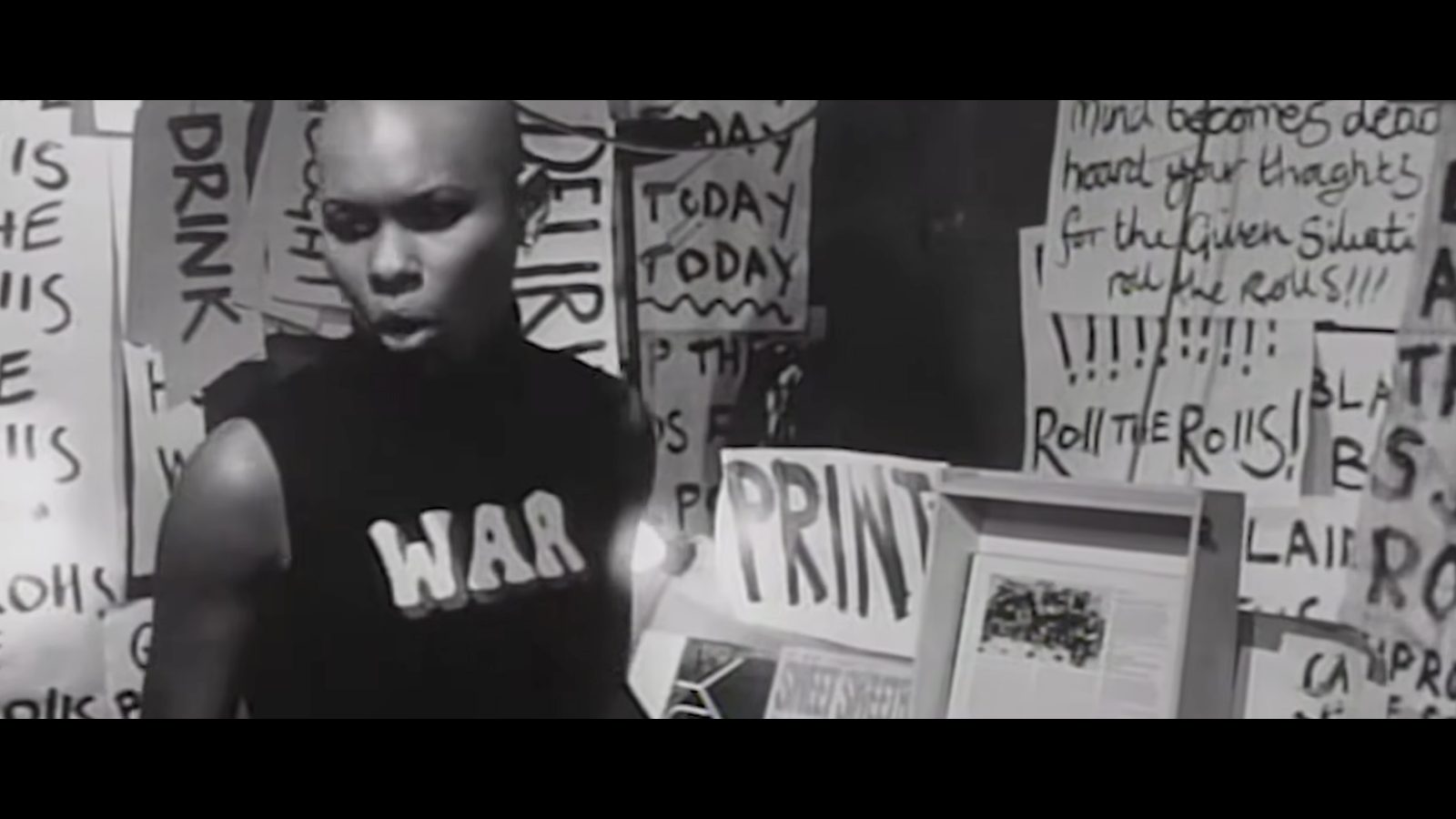
FASHION POLICE

Trendy is obsolete.

Fashion police here.

ON ROTATION

Fashion Neurosis with Bella Freud

Designer Bella Freud — great-granddaughter of Sigmund Freud — puts her guests on a velvet couch and asks them what they’re afraid of. The Kate Moss episode is the one I keep replaying.

VISUAL

Visual

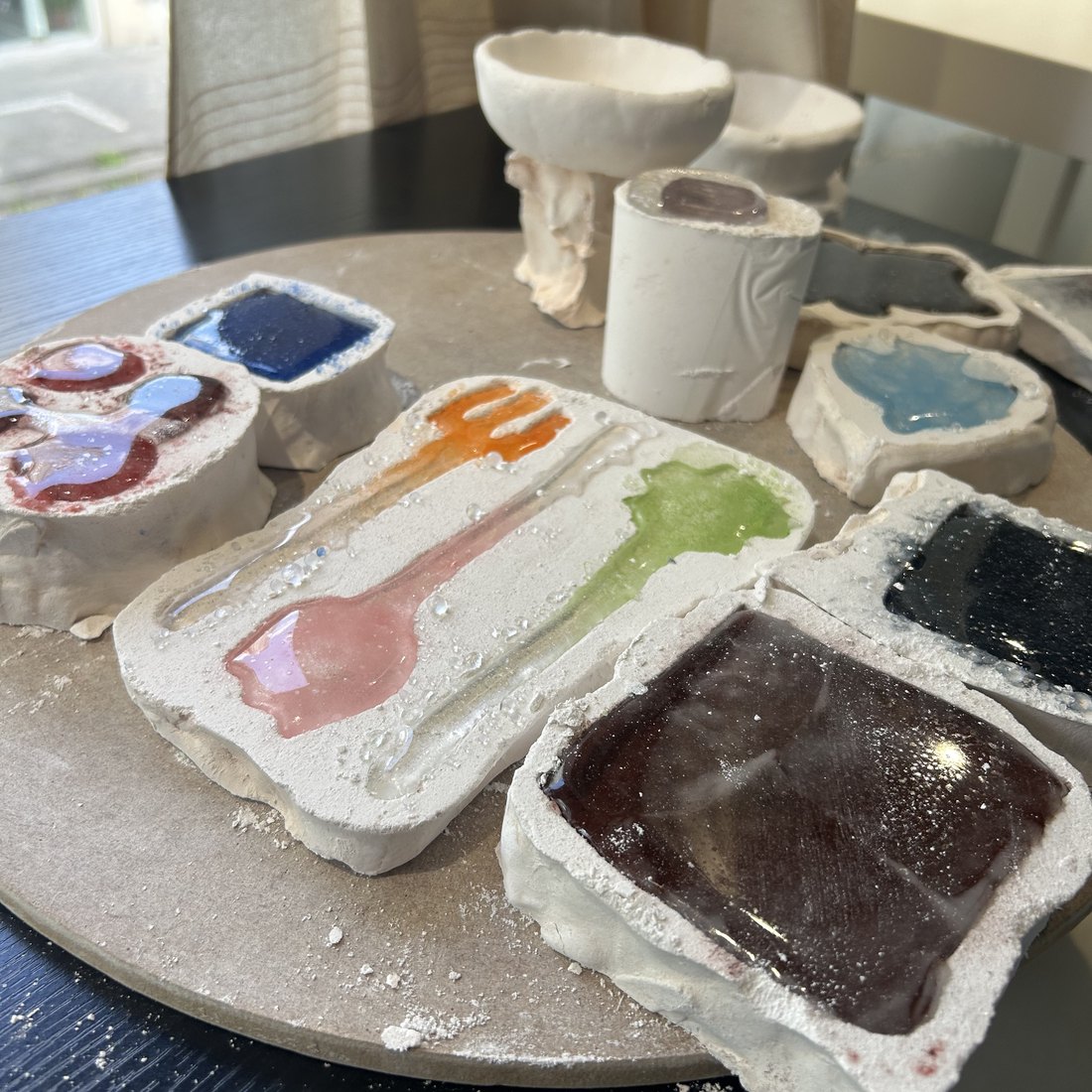
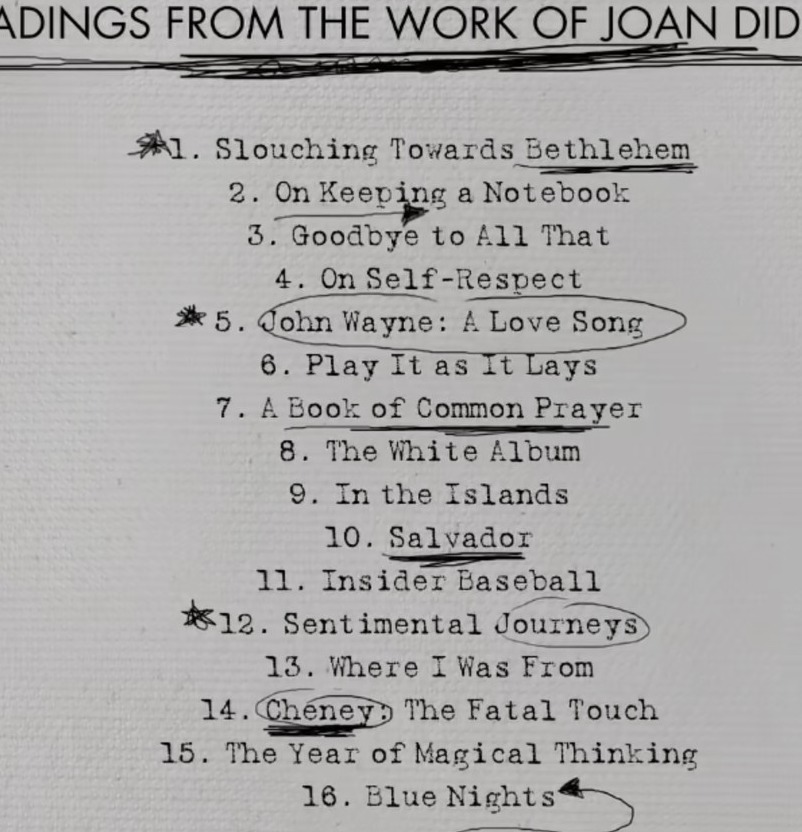
Photos and little things from the years before everything became code — kept around just because they make me smile. Drawn, shot, and loved on. ♡

The machine is the easy part. The hard part is staying human while you build it.

EST 2025 · AILEENA · MACHINA